
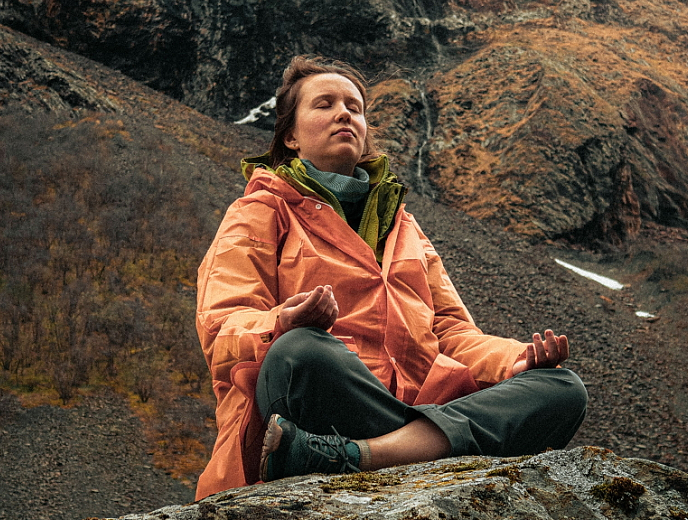
I Breathe, Therefore I Live?
I used to think of breathing as simply a mechanical life force; I breathe. Therefore, I live.
Since deepening my practical knowledge about emotional regulation and its connection to living a happy life, I have discovered that intentionally using breath work calms our fight, flight, and freeze response. One anxiety expert I follow recommends developing a habitual practice of relaxation breathing for at least three minutes daily. Through this practice, we teach our bodies how to engage our breath upon command. This helps our bodies tune into the feeling of safety. I usually recommend practicing breathing at bedtime. It may yield the added benefit of helping you relax into sleep or even help yourself get back to sleep. Incorporating relaxation breathing into our toolbox helps create balance between our minds, bodies, and emotions. When we integrate these systems together, we are better able to ground ourselves in present moment awareness.
It’s true. We have lungs, and breathing is what keeps us alive. However, it is much more than that. Breathing is a life-management tool that has been hard-wired into us since the beginning of humankind. It is our body’s way of managing our response to threats, intimidation, fear, and dysregulation. Intentionally engaging our breath calms us and helps us face life’s storms and even enjoy the good times more fully.
What is the Most Effective Breathing Strategy?
When I started studying this topic to teach it to my clients, the wealth of information was confusing. There are several schools of thought about the most effective breathing strategy. What I might encourage you to do is to search You Tube for various demonstrations of breathing practices and choose the one that feels most comfortable for you.
When people, including mental health care providers, encouraged me to engage my breath to help me calm and regulate, I was resistant. Some of my clients have expressed the same reluctance. They tell me breathing doesn’t work for them. I told my providers that I do not think I breathe normally; I believe I do not benefit from full-range, cleansing breathing, because of my muscle coordination difficulties. Sometimes we have learned various strategies, and now, we can’t remember, “Am I supposed to inhale for four, hold for four, and exhale for four? Or how am I supposed to breathe? I thought, I can’t remember the strategy. A psychiatric nurse practitioner encouraged me to do what I can and count my breaths on the exhale. That is one strategy that works well for me. I share it with my clients. One of them pointed out that focusing on counting her breaths helps her keep her focus on her breathing-a particularly good point. No matter which strategy you choose, you may find that coaching yourself to bring your focus to your breath will help keep you grounded in the present moment. Breath work, and grounding yourself in the present moment, will also help calm your nervous system so that you can focus more fully on helping yourself deescalate worry, seek solutions, or complete your tasks in the present.
Diaphragmatic Breathing
What I do know is, a fully cleansing breath comes from the diaphragm. So, place one hand on your belly, and the other hand on your chest. Inhale and exhale to feel the breathing motion. Try giving the exhale an extra push. The most cleansing part of the breath is exhaling, as it helps us expel carbon dioxide.
Pursed Lips Breathing
Another Breathing technique is called Pursed Lips Breathing. I also like this strategy and share it with my clients. It’s often recommended for women who want to work on strengthening their pelvic floor. What you do is inhale your nose. Then purse your lips as if you are going to breathe out through a straw. If you want to challenge yourself, try holding each exhale for a count of up to ten seconds. As you practice this, your muscle coordination of breathing will improve.
The Breathe Out Dynamic System Breathing Technique
In her book, Just Breathe Out: Using Your Breath to Create a New, Healthier You, Betsy Thomason describes an alternative breathing practice that can invigorate our bodies and provide dynamic, healing that helps us approach our daily activities with strength and confidence. Her approach is the opposite of many of the other strategies I have studied. In most programs I have been a part of, instructors begin by instructing us to breathe deeply in through our nose, or to take several gentle, or deep breaths in through the nose. Various schools of thought encourage varying lengths of time for inhaling, holding, or exhaling. See what I mean? It can be confusing.
Thomason learned the Breathe Out Dynamic System (BODS) from an athletic coach. This strategy begins with the exhale. In this way, we are eliminating carbon dioxide first. Our bodies then naturally and gently inhale. Thomason reports that this strategy is more energizing and sustaining.
Find this book on your Talking Book and Braille Library BARD site, DB#86922 and on Amazon: https://www.amazon.com/Just-Breathe-Out-Betsy-Thomason-audiobook/dp/B01N4PG2FN/ref=sr_1_1?crid=3VG0MM9VTO658&dib=eyJ2IjoiMSJ9.fvVT_vP32eUmQ1jOXKw7BzBTma8e4d5t_Pfa9BJhlxUBtKQqA7huLjLrHVU_L_jziSYQKgEgy4I0bDsk9iiWVDuqlAdwVfFsyc7OlRElZhUlgKYhDn4HWZyCqya6AUco0fN9s2Nal12pRdfojf7oSCmIc7YKP_Ht9-aanZ7aVldwv8d_qpdxcLd9LyCzVYBVBvYzZSOkNQf5CmZHHKVm6-H0Eoqw28tUlLsehBAz7iA.jxos96DLz0NI2xghtxXMrYV1m5HqtFxWK1sixonyA-M&dib_tag=se&keywords=Just+Breathe+Out&qid=1791928075&sprefix=just+breathe+out%2Caps%2C226&sr=8-1-